



Blog
PIR vs mmWave Presence Sensor: Which One Do You Need?

Lights that switch off while you sit still are a PIR problem. This guide explains PIR and mmWave in plain words, when each one is the right choice, and the sensors we sell with real specs and prices.
Use a PIR motion sensor in corridors, stairs and entrances where people pass through. Use a mmWave presence sensor in bedrooms, offices and living rooms where people stay still. If you want both in one device, the Aqara FP300 (EGP 5,500) combines PIR and mmWave. Prices are in Egyptian pounds on 24 November 2026.
How a PIR motion sensor works
PIR means passive infrared. A PIR sensor looks for changes in the infrared heat in the room. When a warm body such as a person moves across its field of view, the heat pattern changes and the sensor reports motion. It does not send out any signal of its own, which is why it is simple, cheap and easy to run on a small battery.
The limit is in the name: a PIR sensor needs movement and a clear line of sight. Texas Instruments describes the difference this way: PIR sensors rely on line of sight and motion, while mmWave radar can pick up micro-movements such as breathing, so it can detect people who are sitting still (TI application note SBAA802).
In real life this explains the classic complaint: you sit and read, the PIR light timer runs out and the lights switch off on you.
How a mmWave presence sensor works
A mmWave presence sensor is a small radar. It sends out radio waves in the millimeter band and reads the reflections. Because it measures tiny changes in those reflections, it can notice a breathing chest or a slight posture change, not only a person walking by. That is the difference between motion detection and presence detection.
It also does not use a camera, so there is no image of your room. Aqara lists the strengths and the limits of its two radar models in its FP2 vs FP300 comparison.
Radar has its own weak spots, so it is not magic: placement, sensitivity and strong background clutter can still cause false triggers. Every product page below tells you the range and angle to plan with.
PIR vs mmWave: side by side
| PIR motion sensor | mmWave presence sensor | |
|---|---|---|
| What it detects | Movement of warm bodies | Movement and still presence (breathing, small movements) |
| Person sitting still | Often lost after the timeout | Designed to keep detecting |
| Best places | Corridors, stairs, entrances, storerooms | Bedrooms, offices, living rooms, any room where people stay still |
| Power | Small battery (CR2450 on the models below) | Often USB or mains power. The Aqara FP300 is a battery model |
| Aura price range | EGP 800 to EGP 2,400 | EGP 1,610 to EGP 9,900 |
| Camera or image | No | No |
Prices are Aura prices in Egyptian pounds on 24 November 2026 and update from the product pages.
When a PIR motion sensor is enough
Choose PIR when people pass through and do not stay: a corridor, a staircase, a hall, a storeroom, a garage or an entrance. The light turns on when someone arrives and off when they leave, and a few minutes of timeout is fine.
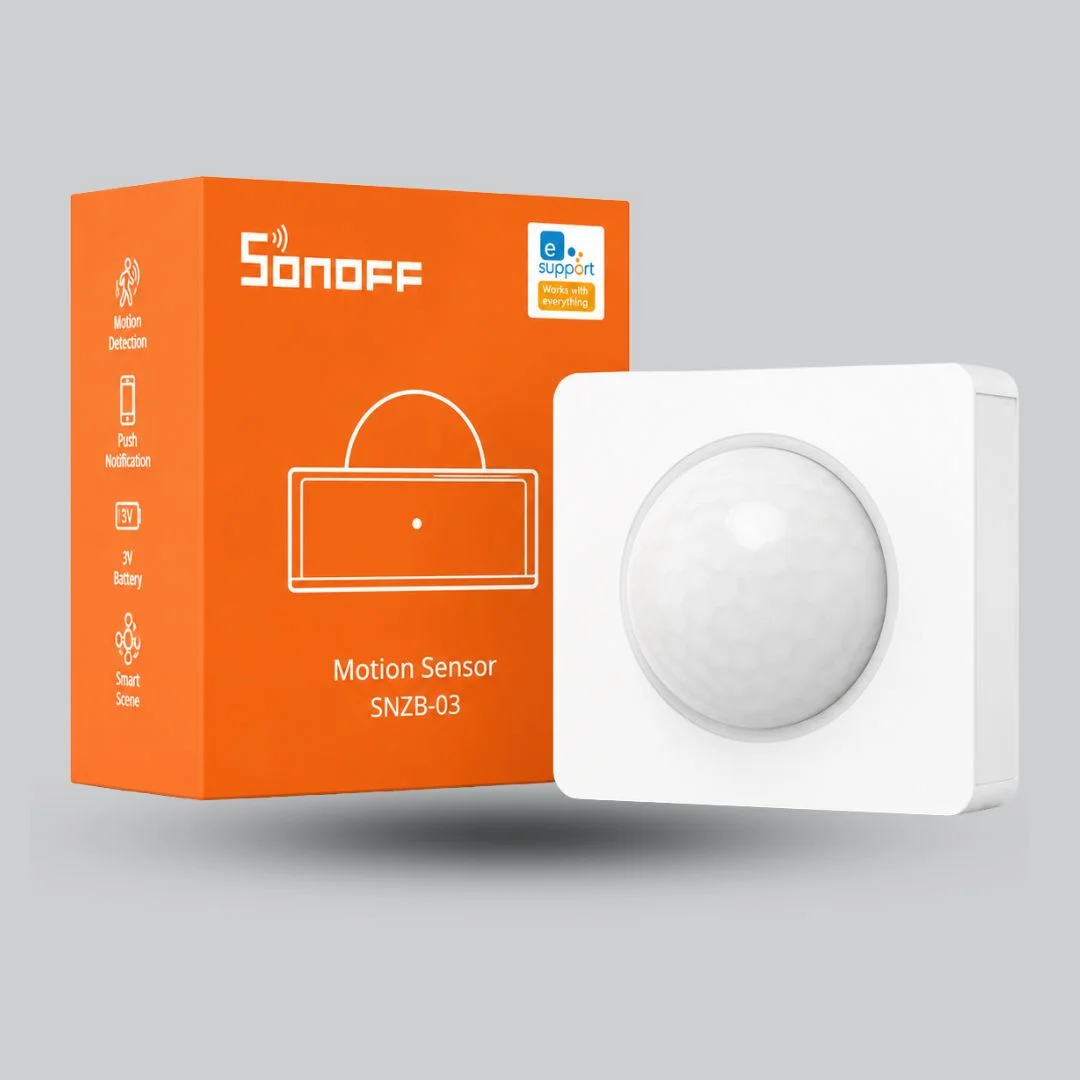
- Battery and simple: the SONOFF PIR3-RF and the SONOFF SNZB-03 run on a CR2450 coin cell and stick on with 3M adhesive.
- Already on Zigbee: the SONOFF SNZB-03 needs a Zigbee gateway, and the AVATTO Zigbee PIR works with Tuya / Smart Life. If you do not have a gateway yet, read our Zigbee gateway guide.
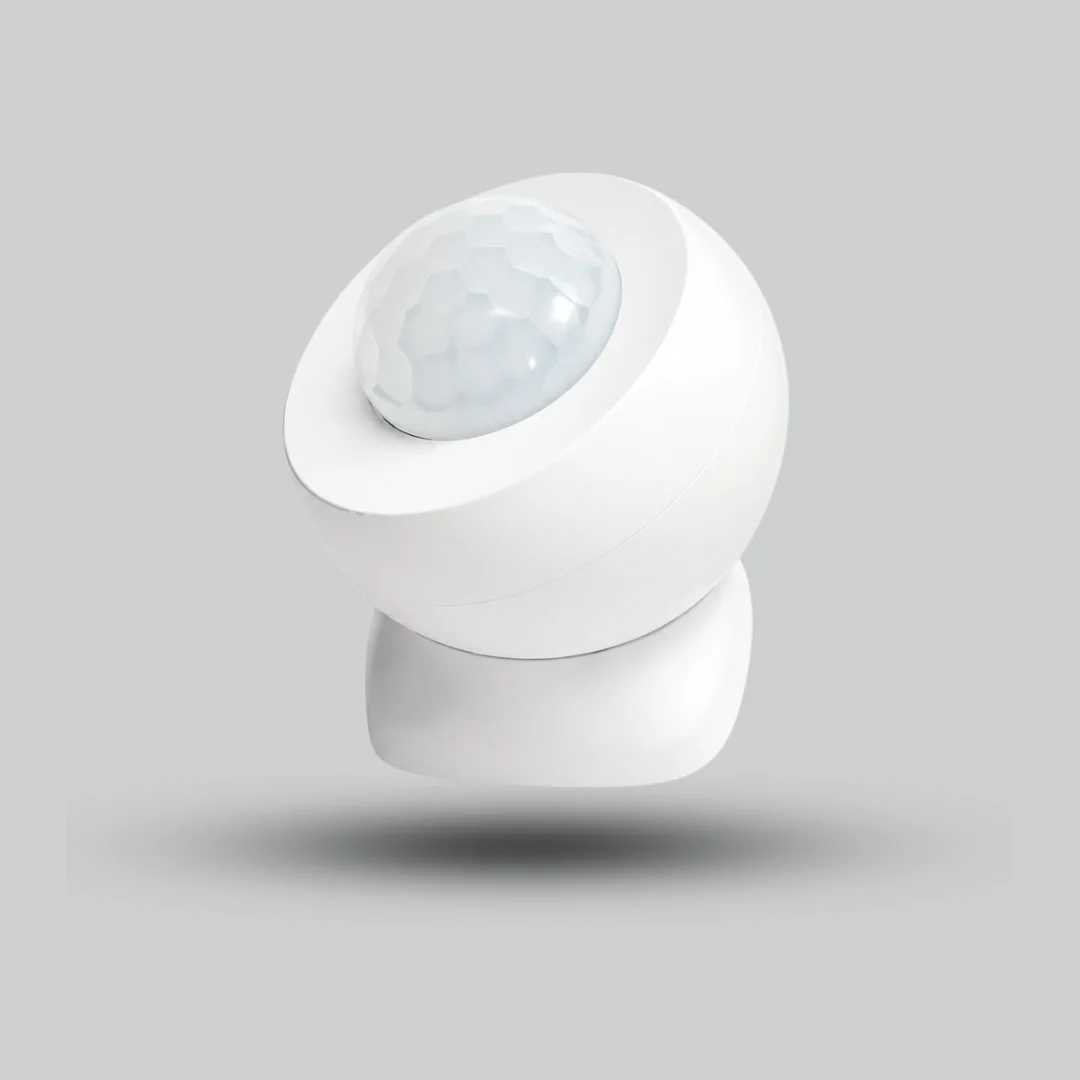
- Wide coverage on a budget: the Aqara Motion Sensor P1 lists up to 170° coverage, adjustable sensitivity and a detection timeout from 1 to 200 seconds.


When you need a mmWave presence sensor
Choose mmWave when people stay still: a bedroom, a home office, a living room, a children’s room or any place where you read, work or watch TV. This is where PIR lights switch off at the wrong time.
- Wi-Fi and Tuya: the AVATTO HE20 uses 24GHz mmWave over Wi-Fi 2.4GHz, with a listed range of up to 5 meters, a 120° angle and three states: nobody, presence and motion. It works with Tuya / Smart Life, Alexa and Google Home.
- Wall or ceiling: the Wenzhi WZ-M100 is listed with 24GHz radar, a 120° angle, up to 7 meters on the wall version, a built-in light sensor from 0 to 2000 lux, and Tuya / Smart Life. The wall version runs on USB 5V and the ceiling version on AC 80 to 240V.
- Zones and tracking: the Aqara FP2 uses 60 to 64GHz radar, divides a room of up to 40 m² into zones and tracks up to 5 people. It connects over Wi-Fi 2.4GHz. Check the product page for stock.
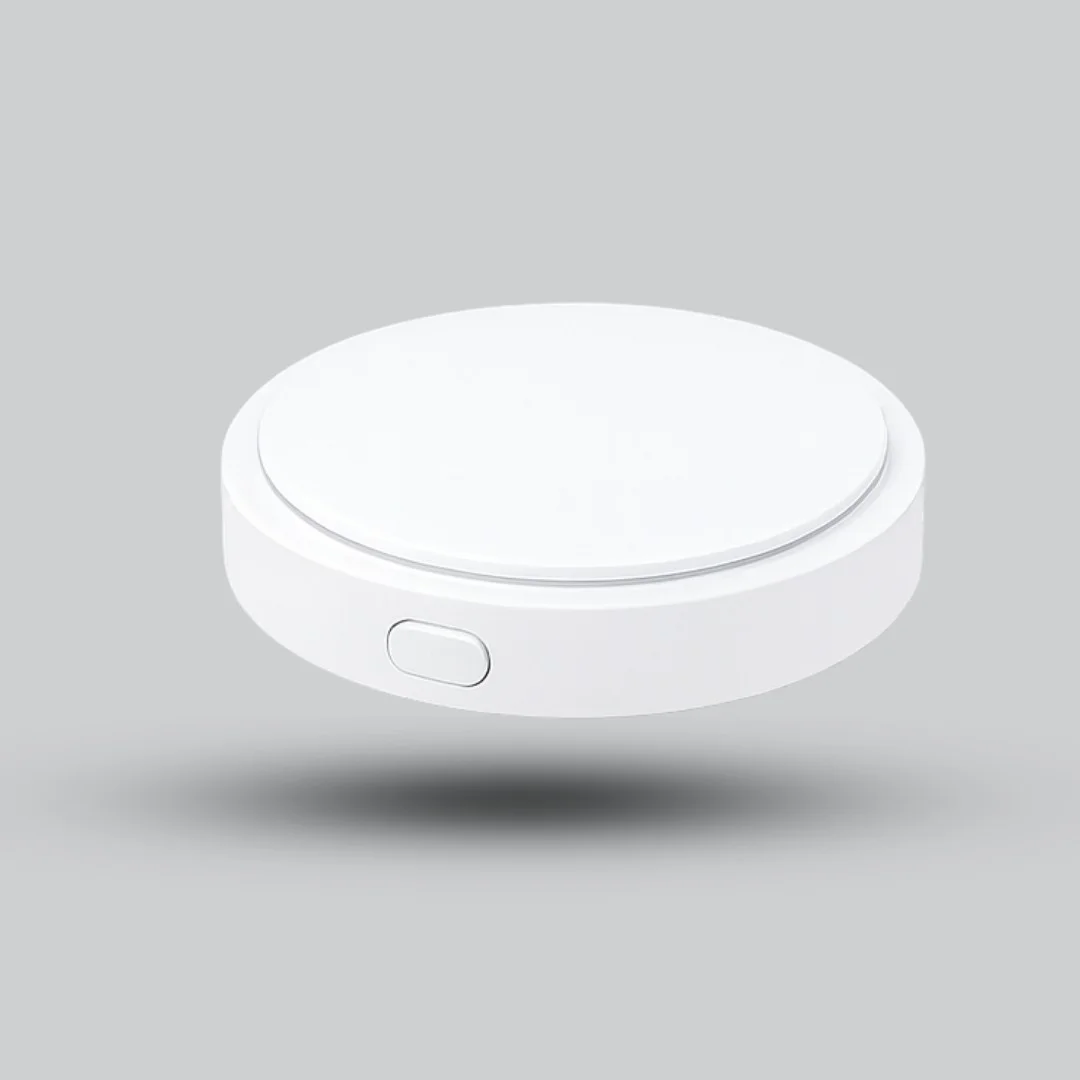
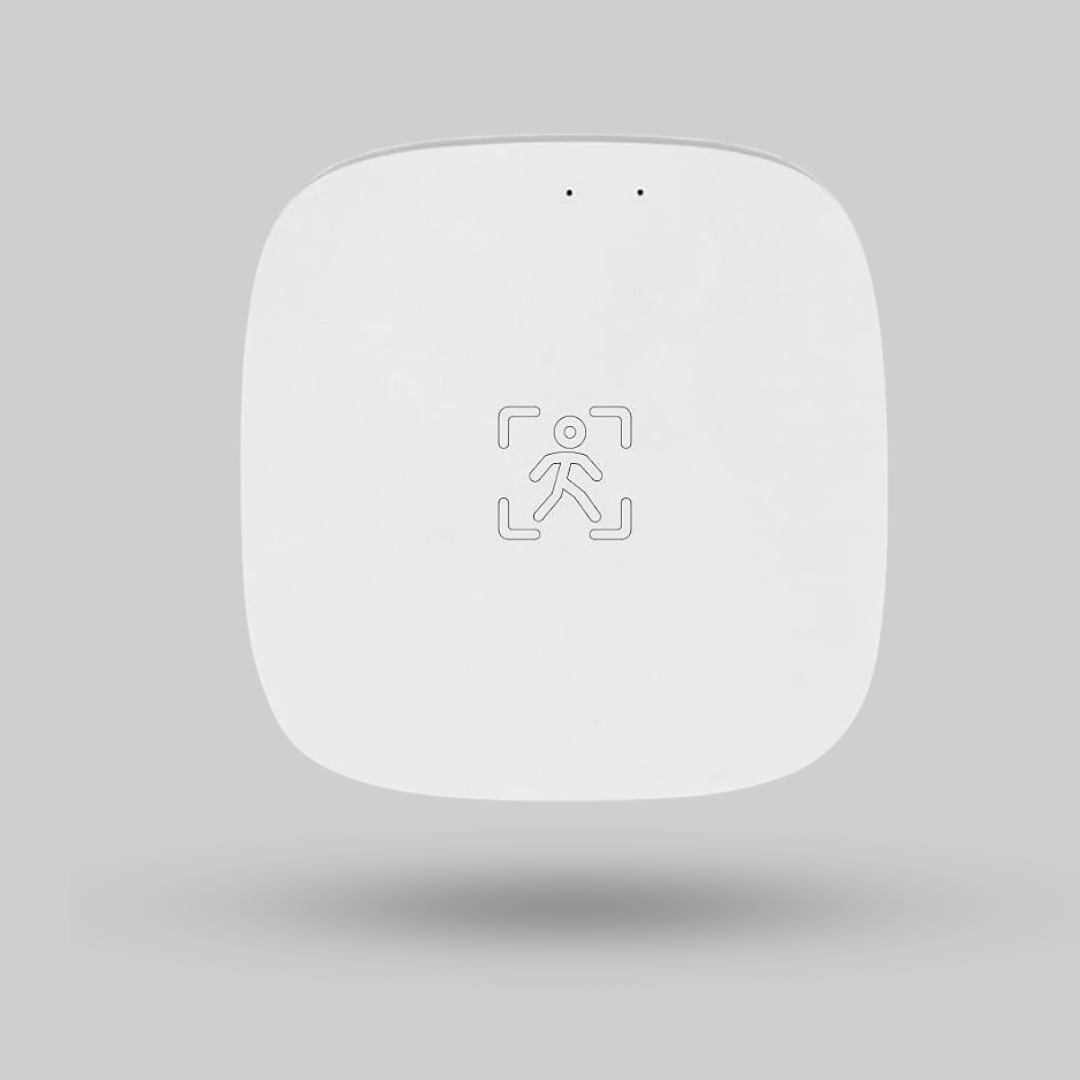
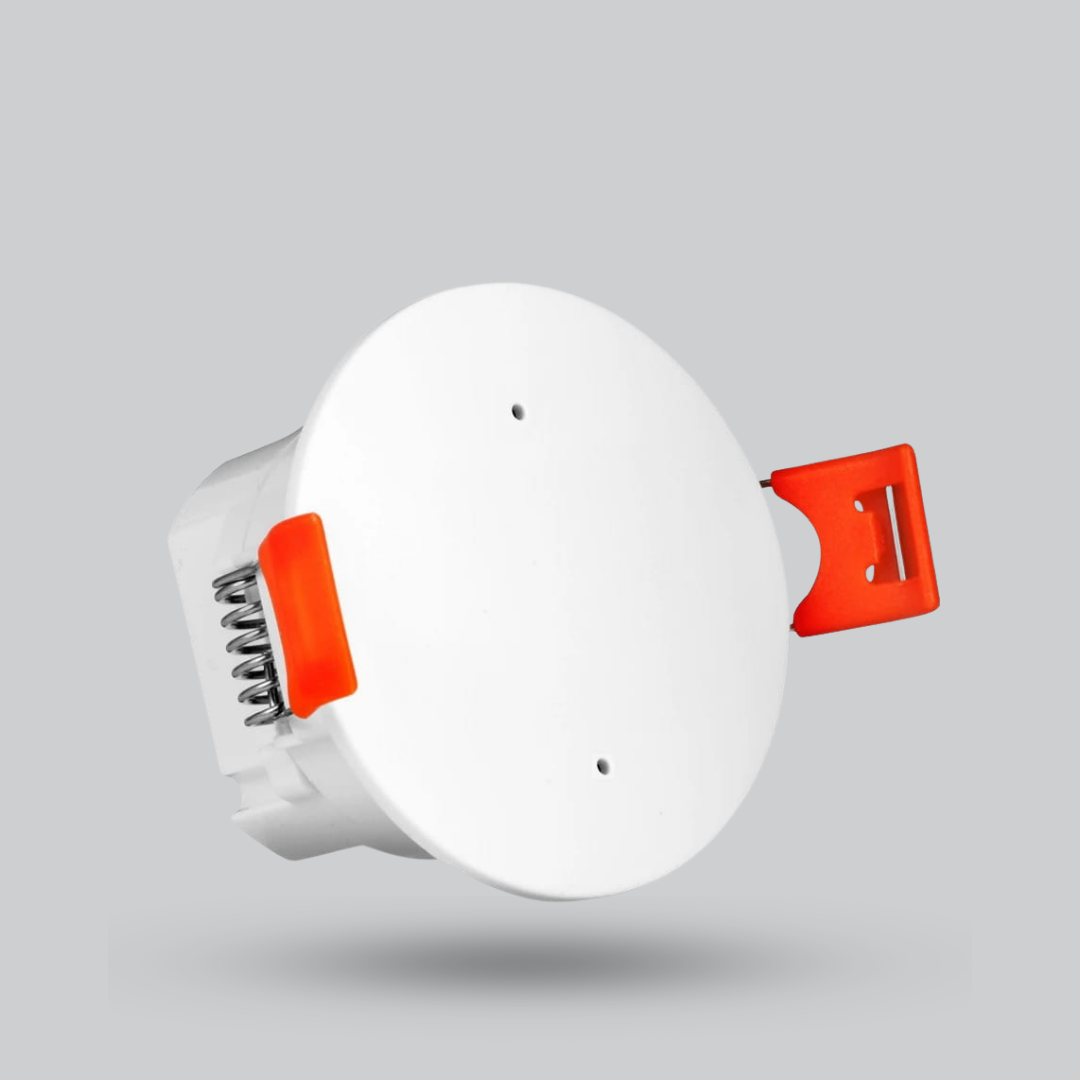

The hybrid option: PIR plus mmWave in one sensor
If you want the speed of PIR and the stillness detection of radar without managing two devices, the Aqara Presence Multi-Sensor FP300 combines both. It lists PIR plus 60GHz mmWave, up to 6 meters with a 120° angle, and also measures light, temperature and humidity. It runs on two CR2450 batteries, with up to about 3 years on Zigbee and about 2 years on Thread according to the product page, and supports Zigbee, Thread and Bluetooth.
It is also a good first step if you are not sure which type you need. Place it in the room where lights keep switching off on you and see the difference.
PIR and mmWave sensors at Aura: specs and prices
Every value below comes from the Aura product page. Prices are in Egyptian pounds on 24 November 2026.
| Sensor | Type | Price | Key specs | Connection |
|---|---|---|---|---|
| SONOFF PIR3-RF | PIR | EGP 890 | 100° angle, about 8 m indoors, CR2450 | 433MHz, needs a SONOFF RF Bridge |
| SONOFF SNZB-03 | PIR | EGP 800 | 110° angle, up to 6 m, CR2450 | Zigbee, needs a gateway |
| AVATTO Zigbee PIR | PIR | EGP 1,890 | Motion alerts and scenes | Zigbee, Tuya / Smart Life |
| Aqara Motion Sensor P1 | PIR | EGP 2,400 | Up to 170°, timeout 1 to 200 s, battery up to 5 years | Zigbee 3.0, needs an Aqara hub |
| AVATTO HE20 | mmWave 24GHz | EGP 1,680 | Up to 5 m, 120°, 3 states | Wi-Fi 2.4GHz, Tuya / Smart Life |
| Wenzhi WZ-M100 (wall) | mmWave 24GHz | EGP 1,610 | 120°, up to 7 m, light sensor 0 to 2000 lux, USB 5V | Tuya / Smart Life, Zigbee or Wi-Fi |
| Wenzhi WZ-M100 (ceiling) | mmWave | EGP 1,620 | Ceiling mount presence detection | Wi-Fi, Tuya / Smart Life |
| Aqara FP300 | PIR + 60GHz mmWave | EGP 5,500 | Up to 6 m, 120°, light, temperature, humidity, 2 x CR2450 | Zigbee, Thread, Bluetooth |
| Aqara FP2 | mmWave 60 to 64GHz | EGP 9,900 | Zones up to 40 m², tracks up to 5 people | Wi-Fi 2.4GHz, Apple Home, Alexa, Google Home |
Browse every sensor in sensors, and see how sensors fit into routines in our smart home automation guide.
Placement and setup tips
- Test where you actually sit. Run the room for a few days and watch the logs in the app before you fix the sensor permanently.
- Mind moving things. Keep any sensor away from fans, curtains and heat sources that move or change temperature.
- Use the right timeout. For PIR lighting, a timeout that is too short is a common reason for lights switching off on people.
- Pair presence with light level. Sensors with a light sensor, such as the Wenzhi WZ-M100 and the Aqara FP300, can turn lights on only when the room is dark.
- Check the wiring first. Wall sensors with USB need a nearby power point, and ceiling sensors with mains power need to be installed safely. Confirm with a technician if you are not sure.
Performance depends on sensitivity, installation position and room layout, so treat the ranges on the product pages as planning numbers, not guarantees. For lighting routines that use these sensors, see smart lights: bulbs, switches or relays.
PIR vs mmWave: frequently asked questions
What is the difference between PIR and mmWave sensors?
A PIR sensor detects movement by reading changes in infrared heat. A mmWave sensor is a radar that can also detect a person who is sitting still by reading tiny movements such as breathing.
Is mmWave better than PIR?
It is better for rooms where people stay still, such as bedrooms and offices. PIR is still a good, cheaper choice for corridors, stairs and entrances.
Why do my lights switch off when I sit still?
Most motion sensors are PIR and need movement to keep the light on. A mmWave presence sensor or the hybrid Aqara FP300 keeps detecting you while you stay still.
Does a mmWave presence sensor have a camera?
No. It uses radar and does not record images, which is why it suits bedrooms and bathrooms.
Do I need a hub for these sensors?
It depends on the model. The AVATTO HE20 and Aqara FP2 connect over Wi-Fi. The SONOFF SNZB-03 needs a Zigbee gateway, the SONOFF PIR3-RF needs a SONOFF RF Bridge and the Aqara P1 needs an Aqara hub. Check the product page.
Which sensor should I buy for a bedroom?
A mmWave sensor such as the AVATTO HE20 or Wenzhi WZ-M100, or the hybrid Aqara FP300 if you want battery power. Place it where it covers the bed and test the sensitivity.
Can I use both PIR and mmWave in the same home?
Yes. Many homes use PIR in corridors and entrances and mmWave in rooms where people stay.
Not sure which sensor fits your room?
Tell us the room, the ceiling or wall position and your platform (Tuya, Aqara or SONOFF) on WhatsApp. We will suggest the right sensor.